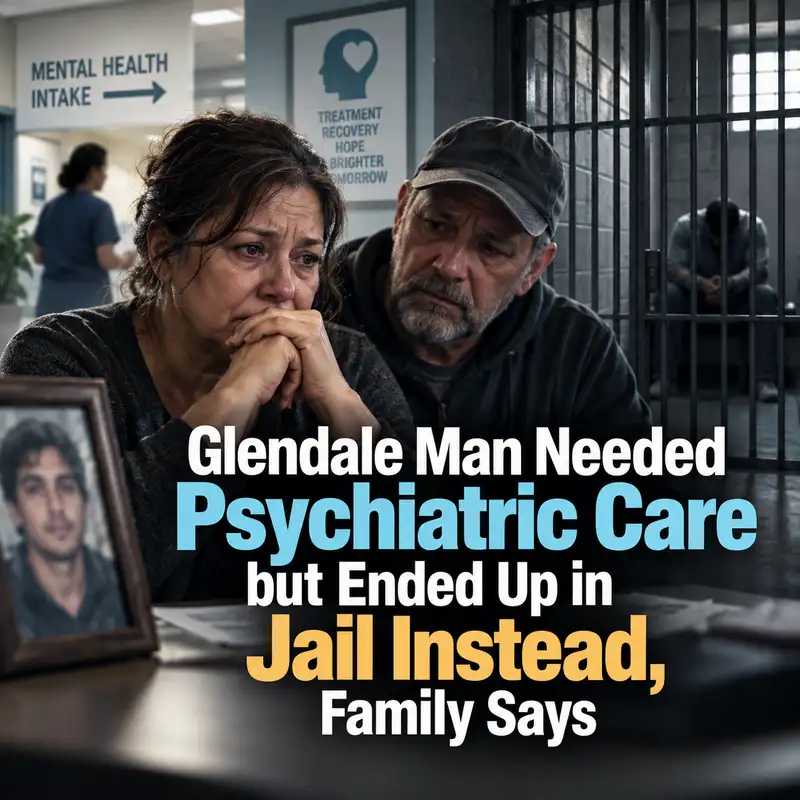
Glendale Man Needed Psychiatric Care but Ended Up in Jail Instead, Family Says
Download MP3When a family member experiences a severe psychiatric emergency, loved ones often exhaust every available resource—calling crisis hotlines, reaching out to mobile response teams, and contacting local hospitals—hoping to secure safe, medical stabilization. However, across many communities, systemic shortages of psychiatric beds and strict legal thresholds for involuntary care leave families with nowhere to turn. According to a heartbreaking local investigation published by Arizona's Family, a Glendale woman spent months desperately trying to get her brother professional psychiatric treatment, only to watch him end up in a jail cell instead.
The report details how the family repeatedly sought help as the man's mental health deteriorated, but found themselves trapped in a fragmented healthcare system. Without immediate access to long-term psychiatric placement or crisis diversion facilities, law enforcement officers were ultimately dispatched during a behavioral disturbance. Because officers often lack alternative medical drop-off options, the situation escalated into criminal charges, effectively turning a correctional facility into a default, ill-equipped mental health ward.
Mental health advocates and legal experts interviewed by AZFamily stress that criminalizing psychiatric illness exacerbates trauma, delays recovery, and strains local justice systems. Advocates are calling on state lawmakers to fund dedicated crisis diversion centers, expand mobile crisis teams trained in de-escalation, and increase psychiatric bed capacity so that individuals in mental distress receive medical care rather than criminal records.
Ultimately, Arizona's Family’s investigation exposes a critical flaw in public safety and healthcare policy. Treating psychiatric emergencies through law enforcement rather than clinical medicine fails vulnerable citizens and their families. Ensuring that individuals experiencing a mental health crisis are met with medical intervention rather than incarceration is essential for building a safer, more humane community.
Join the Recovered Life Community here!
Creators and Guests