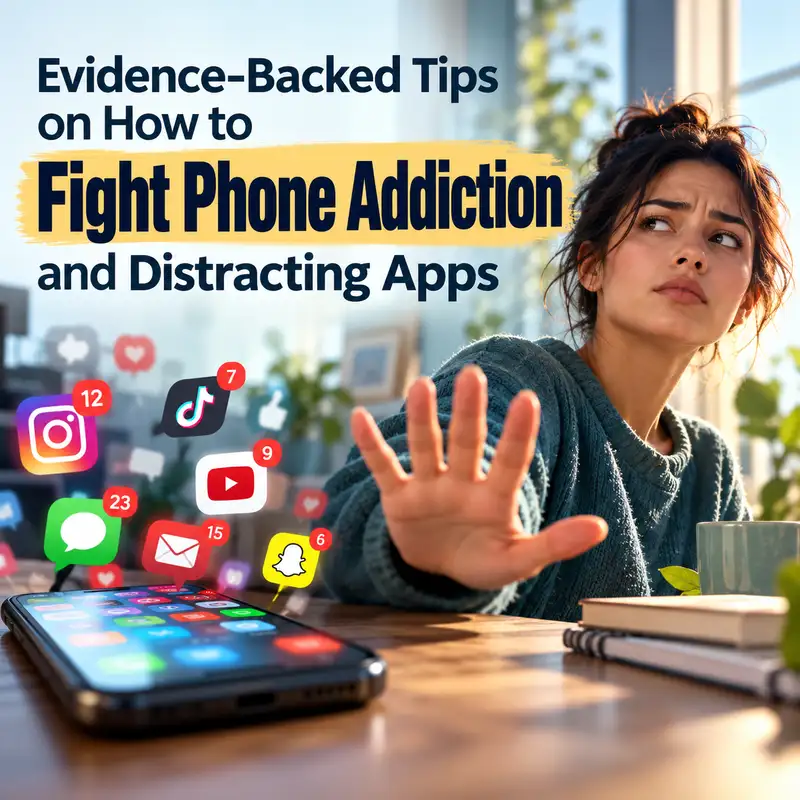
Evidence-Backed Tips on How to Fight Phone Addiction and Distracting Apps
Download MP3Modern smartphones are engineered to capture and sustain human attention. Utilizing variable reward schedules, infinite scroll interfaces, and frequent push notifications, mobile applications tap directly into brain pathways that reinforce compulsive checking behaviors. When users attempt to rely purely on willpower to limit screen time, they often find themselves locked in an uneven fight against sophisticated behavioral algorithms designed to maximize engagement. According to a practical technology and behavioral health report published by The Washington Post, breaking free from smartphone distraction requires implementing structural, evidence-backed strategies that change how we physically and mentally interact with our devices.
Behavioral scientists and tech design experts interviewed by The Washington Post emphasize that introducing intentional "digital friction" is one of the most effective ways to disrupt automatic phone checking. Simple tactical changes—such as switching smartphone screens to grayscale to remove visual dopamine cues, deleting high-distraction social media apps from the home screen, turning off non-human push notifications, and designating physical phone-free zones like the dining table or bedroom—create micro-delays that force conscious choice over habit.
Furthermore, experts advise replacing passive scrolling loops with friction-free, offline activities that satisfy the underlying need for relaxation or mental stimulation. Establishing clear daily temporal boundaries for app access helps retrain focus and protects deep work blocks from constant interruption.
Ultimately, The Washington Post’s coverage reinforces that smartphone reliance is not a personal failure of discipline, but a predictable response to persuasive design. By adopting evidence-based environmental adjustments and intentional habits, users can successfully tame digital distraction, protect their attention, and build a healthier, more balanced relationship with technology.
Join the Recovered Life Community here!
Creators and Guests