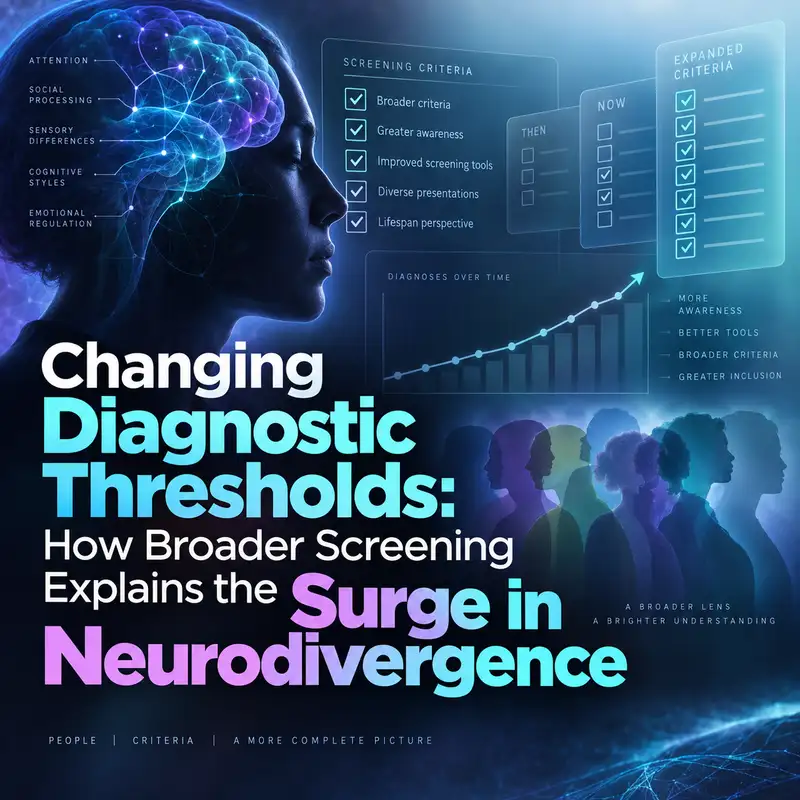
Changing Diagnostic Thresholds: How Broader Screening Explains the Surge in Neurodivergence
Download MP3In recent years, public health data around the world has recorded a dramatic rise in formal diagnoses for attention-deficit/hyperactivity disorder and autism spectrum disorder. While this surge has sparked widespread debate over environmental influences, screen time, or potential over-diagnosis, scientific understanding of what is driving these numbers has remained incomplete. According to a landmark epidemiological study published by SciTechDaily, researchers from Aarhus University and ISGlobal analyzing Danish psychiatric registry data have uncovered a fundamental shift: the demographic profile of individuals receiving these diagnoses today looks vastly different from a decade ago.
The study examined data from over two million children and adolescents, tracking shifts between 2012 and 2022. Historically, diagnoses were concentrated among individuals with distinct clinical risk factors—such as low birth weight, preterm birth, lower parental socioeconomic status, or a family history of psychiatric disorders. However, the researchers discovered that the link between these traditional risk factors and a subsequent diagnosis has progressively weakened. Today, young people receiving an ADHD or autism diagnosis increasingly resemble the general population across birth history and family background.
Lead researchers emphasize that these findings do not mean the conditions themselves are less severe or that risk factors no longer matter. Instead, the narrowing gap indicates that increased clinical awareness, better screening tools in schools, expanded healthcare access, and lowered diagnostic thresholds are identifying individuals with broader and milder symptom profiles who previously went undiagnosed.
Ultimately, SciTechDaily’s coverage highlights the importance of re-framing public health trends. Understanding that rising diagnostic numbers stem from a broader, more representative clinical lens helps healthcare systems, educators, and policy makers plan services that accurately reflect the full spectrum of neurodivergence across the general population.
Join the Recovered Life Community here!
Creators and Guests